



What if your cassette tapes sound dull, lack high frequencies, or play differently on different decks. In many cases, the cause is incorrect magnetic head azimuth.
What Is Magnetic Head Azimuth?
Azimuth is the orientation of the magnetic head relative to the magnetic tape.
Why Proper Azimuth Adjustment Is Important?
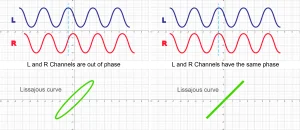
The magnetic head gap must be oriented strictly athwart (perpendicular to) the tape. If it isn’t, the signals from the left and right channels will be out of phase, which leads to frequency cancellation (loss of high frequencies due to phase misalignment), especially at higher frequencies.
What Is a Magnetic Head Gap?
Every magnetic head, regardless of the material it is made from, has a small gap from which the magnetic field spreads. This gap cannot be seen without a microscope, but its width and uniformity are essential for achieving proper frequency response.
The narrower and more even the gap, the higher the frequencies the head can record or reproduce.
What Happens When Azimuth Is Incorrect?
To understand this, imagine in-phase and out-of-phase signals. When two signals (for example, the left and right channels of a stereo recording) are in phase, their combined signal is at its maximum. When they are out of phase, they partially cancel each other out, meaning the listener will not hear those frequencies clearly.
Music is a superposition of sound waves of different lengths. Longer waves produce lower frequencies, and shorter waves produce higher frequencies. With cassette tape, due to its limited width and relatively slow tape speed, the most sensitive frequencies to azimuth misalignment are the high frequencies. When azimuth is incorrect, high frequencies are reduced, and the cassette sounds dull and lifeless.
Is It Possible to Adjust Azimuth Without Special Equipment?
Yes, it is possible, but proper adjustment ideally requires an oscilloscope and a test cassette with accurately recorded reference signals.
That said, azimuth can also be adjusted by ear. For this, you only need a well-produced cassette made on professional equipment, practically any licensed commercial tape will work. You play the tape and slowly rotate the azimuth adjustment screw while listening carefully. The correct setting will produce the loudest signal with the richest high frequencies.
Where Can I Find the Azimuth Adjustment Screw?
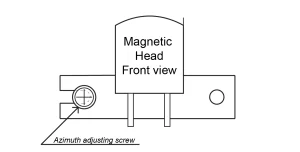
Almost every tape player or recorder allows azimuth adjustment, except for very cheap models. On tape transport mechanisms without auto-reverse, the azimuth screw is usually the left screw on the head mount. To access it, you’ll need to remove the cassette door and use a suitable small screwdriver.
Why Do Tapes I Record on My Deck Sound Great, but Other Cassettes Sound Bad?
This is most likely caused by incorrect azimuth alignment. Cassette decks either use a single head for both recording and playback, or separate but mechanically linked heads. In both cases, the azimuth is the same for recording and playback. This means that tapes recorded and played back on the same machine will always sound correct, even if the azimuth is far from the standard. However, tapes recorded elsewhere will reveal the misalignment.
How Can I Tell If My Azimuth Needs Adjustment?
If cassettes sound noticeably different on your device compared to other players, or if the sound lacks clarity and high frequencies, azimuth misalignment may be the cause (though it’s not the only possible reason). A simple check is this: if tapes recorded on your deck sound much better than commercially recorded tapes or tapes made on other machines, then incorrect azimuth alignment is the most likely issue.